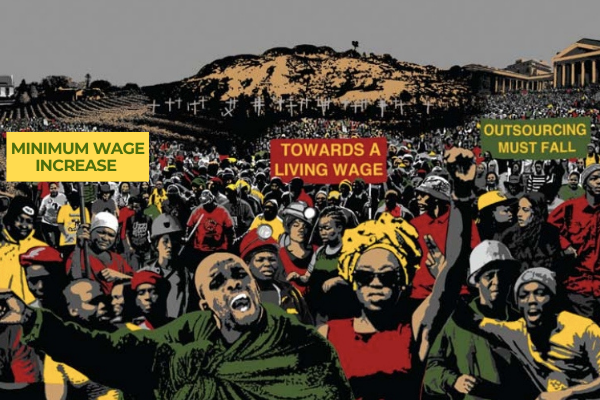
Beyond the National Minimum Wage: The Persistent Exploitation of South Africa’s Agricultural Workers
South Africa’s National Minimum Wage currently stands at R30.23 per ordinary hour worked, a rate that has applied equally to farm workers and domestic workers since 1 March 2026 following a 5% increase announced earlier this year. While this adjustment was presented as progress and welcomed by some organised labour formations as better than the previous R28.79, it remains far from sufficient to deliver a life of dignity. From a trade union perspective, the wage floor is only the starting point. For agricultural workers, the deeper problem lies in the systemic financial exploitation that continues to hollow out already inadequate earnings.
Farm workers are not simply low-paid employees; they are often trapped in a web of deductions, restricted access to basic services, and coercive living arrangements that leave families in perpetual precarity. One of the most troubling practices reported across farms is the requirement that low-earning parents continue to pay rent for adult children over the age of 18 who live on the property. These young adults frequently request employment on the same farm, only to be refused. Yet the landlord-employer still demands rent from the parent’s meagre wage. This arrangement effectively transfers the cost of housing unemployed family members onto the lowest-paid workers, turning the farm into a site of intergenerational extraction rather than opportunity.
Electricity supply on many farms compounds the hardship. Access is frequently expensive and highly bureaucratic. Workers are often restricted to purchasing electricity tokens or units only on designated days, creating artificial scarcity and forcing households to manage power carefully or go without. When combined with the cost of the electricity itself, this system functions as another quiet deduction from disposable income.
Farm shops present a further problem. Legislation governing the farm worker sector limits certain deductions, including those related to accommodation, and historically set clear ceilings. In practice, however, workers report that purchases or account systems at on-farm shops routinely absorb more than 10% of their wages. Because these shops are often the most convenient or only accessible source of basic goods, the effective take-home pay is reduced still further. The result is a cycle in which the employer pays the statutory minimum with one hand and recovers a significant portion with the other through rent, electricity arrangements, and retail mark-ups or account deductions.
These practices sit alongside the reality that the National Minimum Wage itself does not provide a living wage. Zwelinzima Vavi of SAFTU has been clear in his criticism, stating that the current arrangement entrenches inequality and that inflation-linked increases are insufficient when the starting point remains poverty wages. Similarly, political commentator Brett Herron has observed of the latest adjustment: “On paper, that sounds like progress. An extra R1.44 an hour… But let’s be honest: this increase does not end poverty; it merely manages it.” Although his remarks focused on domestic workers, the arithmetic applies with equal force to farm workers, many of whom face additional rural isolation, limited public transport, and dependency on the employer for housing and services.
Trade unions representing agricultural workers have long argued that compliance with the letter of the National Minimum Wage Act is necessary but not sufficient. Genuine progress requires rigorous enforcement against unlawful or excessive deductions, an end to the practice of charging rent for unemployed adult dependants while denying them work, transparent and affordable access to electricity, and regulation of farm shops so that they cannot become vehicles for recovering wages. Inspectors must be empowered and resourced to investigate these interconnected forms of exploitation rather than limiting their focus to the hourly rate alone.
The agricultural sector remains vital to South Africa’s economy and food security. Workers who sustain it deserve more than a statutory floor that is then eroded by the very conditions of their employment and residence. A constructive path forward lies in strengthened collective bargaining, sector-specific determinations that address the full cost of living on farms, and consistent state enforcement that treats these forms of financial pressure as the serious labour rights violations they are. Only then will the promise of the National Minimum Wage begin to translate into real improvement in the lives of the men and women who work the land.
NATIONAL MINIMUM WAGE